Removal Reviews: Recycling and Sustainability Commitment
 Removal Reviews is committed to reducing the environmental impact of every move and clearance. Our sustainability page explains targets, local partnerships and the practical steps our teams take to drive resource recovery and low-carbon transport. Across the region we work within borough recycling frameworks — from separate food waste collections to dry recycling rounds — to maximise diversion from landfill and support local circular-economy initiatives.
Our recycling percentage target
We have set a clear, measurable goal: a company-wide recycling and reuse target of 85% by 2028 for all household and office items collected through Removal Reviews operations. This target covers materials that are recycled, repurposed or donated. It applies to construction waste from light refurbishments, bulky household goods, soft furnishings, electrical appliances and packaging materials. Achieving this requires coordinated sorting at source, accurate reporting and strong local transfer-station relationships.
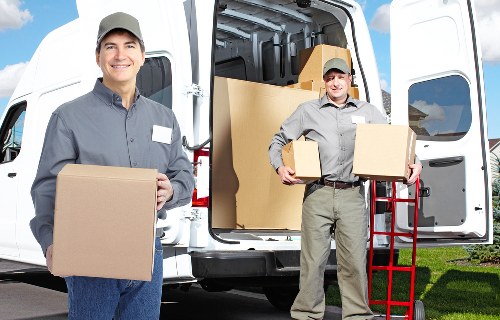 To reach and report progress against that target we separate loads where feasible and use approved transfer stations that accept segregated streams (wood, metal, mixed recyclables, inert waste). We track metrics for reuse and recycling per job and publish aggregated data internally to drive continuous improvement. Our removals reviews and operational teams use these figures to refine collection methods and reduce contamination in borough-specific recycling streams.
Local transfer stations and responsible processing
We partner with local transfer stations and materials recovery facilities (MRFs) that operate under the boroughs’ waste separation rules. In many boroughs, glass, cans, plastics and paper are collected as co-mingled streams that MRFs then sort mechanically and manually. Other areas maintain separate routes for food waste, textiles banks and bulky waste. Our crews follow borough-specific guidance to ensure collected materials are processed correctly and not rejected due to contamination.
How we handle different materials
We prioritise reuse and specialist recycling depending on material type by following a hierarchy of actions:
- Reuse first — functional furniture and appliances are assessed and redirected to rehoming partners.
- Specialist recycling — e-waste goes to licensed WEEE processors; mattresses and upholstered items are routed to accredited recyclers.
- Residual processing — non-recyclable residuals are minimised and taken to energy-recovery or appropriate disposal facilities only when no other option exists.
 We maintain rigorous documentation for loads delivered to transfer stations, which supports transparent removals reviews and allows our clients and partners to verify the destination and fate of items collected.
Charity partnerships and community redistribution
 Partnerships with charities are central to our reuse strategy. We work with national and local voluntary organisations to donate secure, working items — from kitchenware and clothing to sofas and beds. These collaborations reduce waste, support people in need and lengthen the life of usable goods. Our network includes multiple local charity partners across boroughs, ensuring donations remain within community supply chains where possible.
Our approach to charity partnerships includes: careful item triage by trained staff; scheduled drop-offs coordinated with charity logistics; and documentation that records quantities and types of goods donated. This ensures removals reviews and inventory notes are matched with donation receipts, helping both parties report on social and environmental outcomes.
 Low-emission fleet and transport choices
We are transitioning to a low-carbon van fleet to reduce emissions across all stages of a move. Our current measures include deployment of electric vans on urban rounds, plug-in hybrids for mixed-distance jobs and Euro 6 diesel vans where zero-emission options are not yet viable. Drivers receive eco-driving training to cut fuel use and emissions during collections and drop-offs. Using a mixed low-carbon fleet helps us meet carbon reduction milestones while maintaining reliable service across varied boroughs.
Monitoring, reporting and continuous improvement
Removal Reviews assesses environmental performance using a combination of tonnage tracking, destination audits (transfer station and charity receipts) and vehicle emissions data. Regular audits identify opportunities to increase reuse, improve sorting at source and expand routes serviced by electric vehicles. We report progress internally and set operational targets aligned with our 85% reuse/recycling ambition.
Removal reviews of processes, driver behaviour and partnership outcomes feed into our sustainability roadmap. Through ongoing collaborations with local councils, transfer stations and charities, and by investing in low-carbon vans, we are committed to measurable reductions in waste and emissions while supporting community needs and the circular economy.
Removal-Reviews combines practical on-the-ground action with strategic targets to make every clearance and move more sustainable. By aligning with borough waste separation schemes, strengthening relationships with transfer stations, expanding charity partnerships and accelerating a low-carbon fleet, we aim to lead by example and deliver removals with a smaller environmental footprint.